
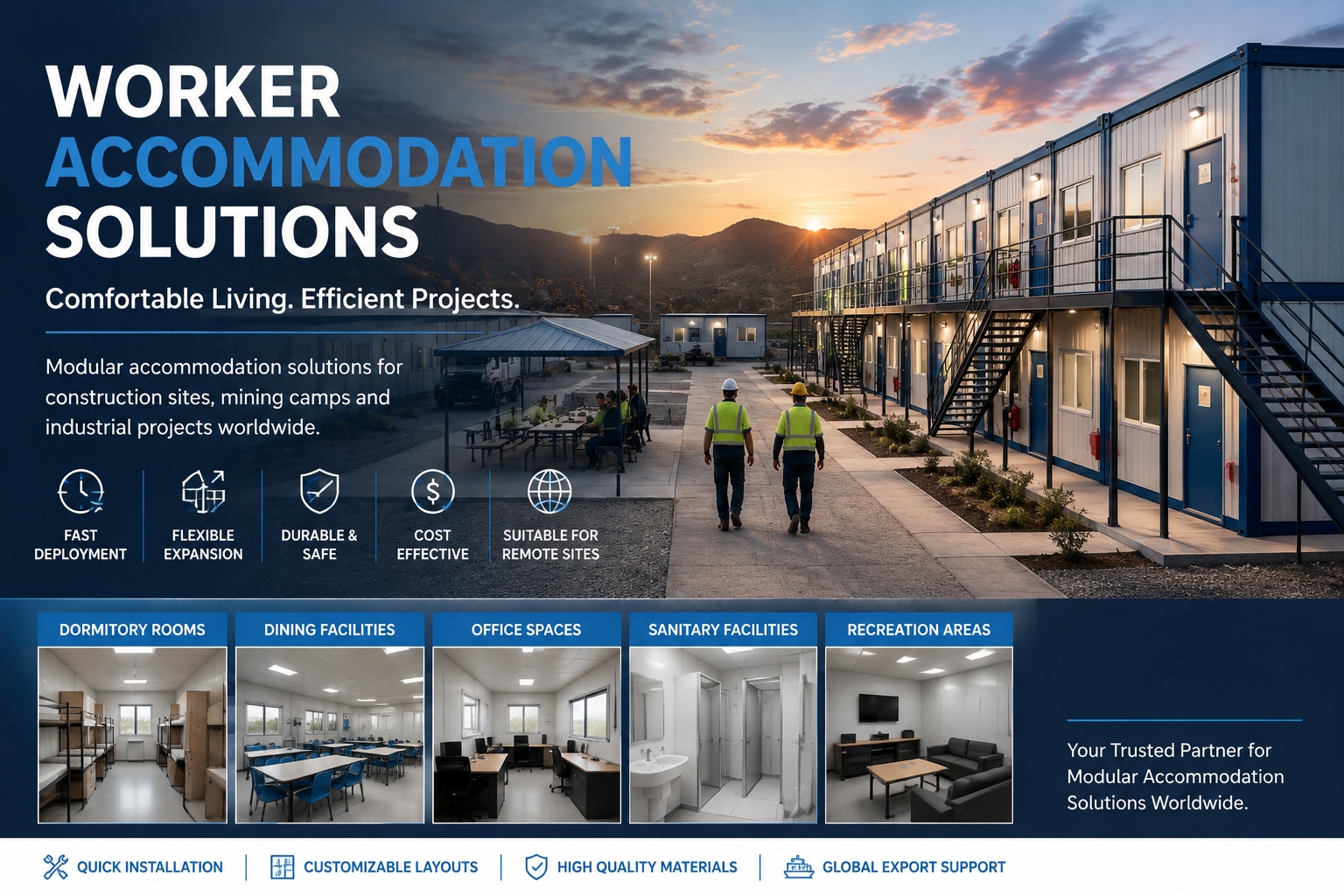
Planning a remote workforce camp? This application guide details modular worker accommodation solutions, including Flat Pack container dormitories, Detachable site cabins, and expandable management quarters for mining, construction, and energy projects.
Key Takeaways
- Optimized Freight & Scalability: Flat Pack and Detachable container systems maximize international ocean freight capacity, allowing developers to ship up to 8–10 dorm units per $40\text{ft}$ High Cube container.
- Rapid Remote Deployment: Prefabricated modular units significantly reduce on-site civil works, allowing mining, energy, and construction camps to achieve operational readiness weeks faster than traditional masonry options.
- Engineered for High Occupancy: Structural steel framing, heavy-duty floor sub-bases, and durable wall surfaces are engineered to withstand continuous commercial use by large workforces.
- Turnkey Living Infrastructure: Systems easily scale from basic 2-to-4-bed labor dormitories to integrated camp complexes featuring administrative site offices, central mess halls, commercial kitchens, laundry blocks, and sanitary facilities.
What Are Modular Worker Accommodation Solutions?
Modular worker accommodation solutions are pre-engineered building systems designed to provide durable, comfortable, and scalable living quarters for workforces operating on remote job sites, construction camps, and industrial projects.
Instead of relying on slow, weather-dependent site construction, modular camps are fabricated off-site under factory-controlled conditions. Structural steel frames, insulated sandwich wall panels, electrical distribution networks, and plumbing manifolds are manufactured in parallel with site civil work and then shipped directly to project locations for assembly.
These modular housing systems serve several core industrial sectors:
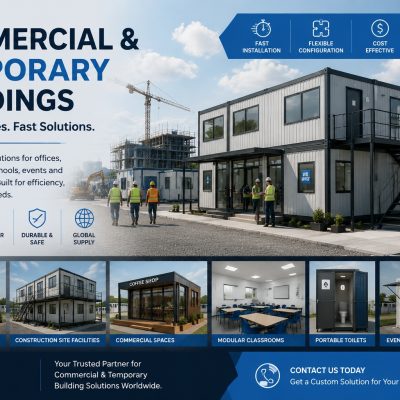
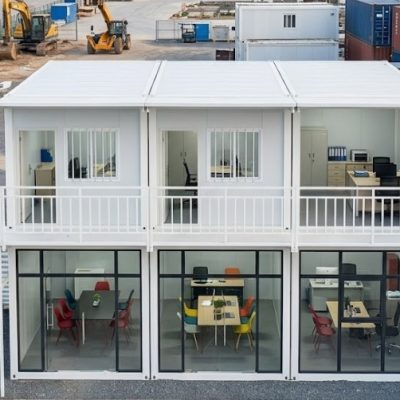
- Construction Site Infrastructure: Field dormitories, site offices, and welfare blocks for civil engineering and urban developments.
- Mining & Resource Operations: Large-scale residential camps, labor dorms, and administrative facilities built for long-term remote mining sites.
- Oil, Gas & Energy Projects: Remote accommodation facilities for pipeline installations, refinery builds, and renewable power plant developments.
- Emergency & Disaster Relief Facilities: Rapidly deployable housing units for first responders, displaced populations, and municipal projects.
What Are the Key Applications of Modular Workforce Housing?
                        +-----------------------------------+
                        |   WORKFORCE CAMP APPLICATIONS     |
                        +-----------------------------------+
                                          |
        +-----------------+---------------+---------------+-----------------+
        |                 |                               |                 |
        v                 v                               v                 v
+-----------------+ +-----------------+           +-----------------+ +-----------------+
| Construction    | | Mining Camp     |           | Oil, Gas &      | | Emergency &     |
| Job Sites       | | Operations      |           | Energy Sites    | | Disaster Relief |
+-----------------+ +-----------------+           +-----------------+ +-----------------+
| * Labor Dorms   | | * Multi-Story   |           | * Pipeline Camps| | * Rapid Housing |
| * Site Offices  |   Dormitories     |           | * Refinery Hubs | | * Field Clinics |
| * Mess Halls    | | * Recreation Hub|           | * Substation    | | * Command Posts |
| * Welfare Units | | * Executive Suites          |   Quarters      |                   |
+-----------------+ +-----------------+           +-----------------+ +-----------------+
1. Construction Site Camps & Welfare Facilities
Civil infrastructure builds and commercial site developments require flexible temporary housing that can be expanded as manpower increases and dismantled or relocated when the project closes out.
- Primary Uses: Multi-bed worker dormitories, project manager offices, site canteens, changing rooms, and sanitary blocks.
- Key Advantages: Quick deployment, stackable up to 3 stories to optimize land use, and high structural reusability across multiple project lifecycles.
2. Mining Operations & Remote Resource Housing
Mining sites operate in isolated regions with harsh climates, requiring durable, climate-controlled accommodation designed to maintain worker health and retention.
- Primary Uses: High-density worker dormitories, senior staff private suites, central dining halls, commercial laundries, and recreation centers.
- Key Advantages: Engineered for extreme environmental loads (high wind speed, heavy snow, thermal insulation) with heavy-duty anti-corrosion frame coatings.
3. Oil, Gas & Renewable Energy Infrastructure
Energy developments along pipelines, solar arrays, wind farms, and power plants demand scalable housing configurations that move seamlessly along project corridors.
- Primary Uses: Pipeline construction camps, substation maintenance quarters, and power station housing complexes.
- Key Advantages: High ocean transit density, rapid bolted frame assembly, and adaptability to desert or arctic environments.
4. Emergency Relief & Municipal Temporary Facilities
When natural disasters or urgent public works require immediate shelter, modular accommodation units can be deployed and assembled within days.
- Primary Uses: Post-disaster emergency shelters, municipal labor quarters, seasonal agricultural housing, and medical isolation wards.
- Key Advantages: Pre-wired, pre-plumbed, and rapidly deployable with minimal site preparation demands.
Which Modular Products Power Large-Scale Worker Camps?
Selecting the right modular housing platform depends on required occupant density, site transport constraints, and planned project longevity:
| Product Category | Frame Construction | Shipping Format | Stackability | Best Operational Application |
| Flat Pack Container House | Galvanized steel chassis + corner columns | 4 Units bundled as $20\text{ft}$ ISO frame | Stackable up to 3 stories | High-volume worker dormitories, multi-story offices, mining camps |
| Detachable Container House | Fully knocked-down bolted steel frame | Loose bundled profiles & wall panels | Stackable up to 2 stories | Tight access sites, rental accommodation fleets, relocatable camps |
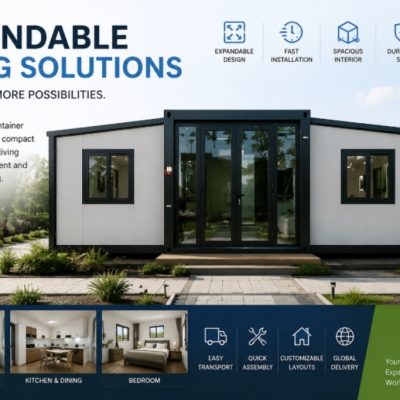
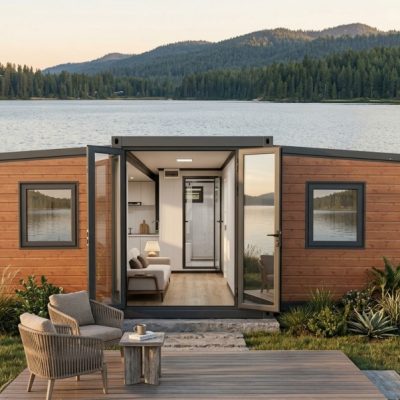
| Expandable Container House | Folding structural frame + side wings | 1 Single folded unit per shipping slot | Single-story placement | Executive management suites, field clinics, remote supervisor offices |
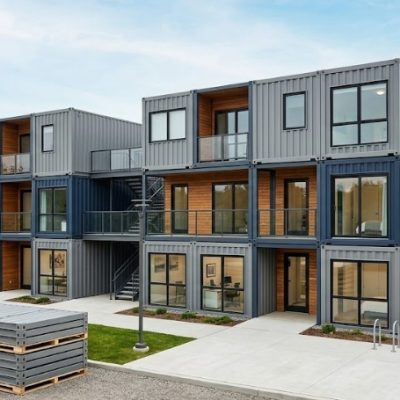
| Modular Dormitory Complex | Structural steel frame + custom wall paneling | Knocked-down sub-assemblies | Stackable 2 to 3+ stories | Master-planned camps, large dining halls, central welfare hubs |
Why Choose Modular Accommodation for Industrial Camps?
1. Accelerated Camp Commissioning
Simultaneous off-site manufacturing of modular units and on-site foundation preparation reduces total camp setup schedules by up to 50% compared to traditional brick-and-mortar builds.
2. Scalable Capacity & Relocation Flexibility
Modular camp layouts can expand organically by adding extra flat-pack modules as headcount grows. Once a project concludes, detachable units can be unbolted, repacked, and shipped to the next job site.
3. High Shipping Density & Lower Landed Costs
Knocked-down flat-pack systems allow up to 8–10 standard accommodation units to ship inside a single $40\text{ft}$ High Cube shipping container, dramatically reducing international ocean freight overhead.
4. Heavy-Duty Interior Finishes for High Occupancy
Units feature anti-bacterial PVC/SPC flooring, galvanized steel insulated sandwich panels ($50\text{ mm}$ to $100\text{ mm}$ EPS, Rockwool, or PU), aluminum windows, pre-wired LED lighting, and pre-routed wet-bath plumbing.
What Factors Should Buyers Consider Before Purchasing a Modular Camp?
- Occupant Density & Facility Ratios: Calculate required floor space per worker, sanitary fixture counts (toilets, showers, urinals, sinks per 100 workers), and central dining seating capacities prior to finalizing layout designs.
- Site Climate & Thermal Insulation: Select appropriate insulation cores ($50\text{ mm}$ EPS for mild zones; $75\text{ mm}$ to $100\text{ mm}$ Rockwool or PU for high-heat deserts or sub-zero environments) to minimize long-term HVAC power consumption.
- Electrical Voltage & Plumbing Standards: Verify local grid specifications ($110\text{V}/60\text{Hz}$ or $220\text{V}/50\text{Hz}$) and plumbing manifold standards for wet baths, kitchens, and laundry blocks.
- Foundation & Site Prep Work: Ensure site pads are prepped with level concrete piers, strip footings, or gravel pads designed to handle stacked structural loads.
What Are the Frequently Asked Questions (FAQ)?
How many workers can a single modular container house accommodate?
A standard $20\text{ft}$ modular container house ($6058\text{ mm} \times 2438\text{ mm}$) is typically configured to accommodate 2 to 4 workers using bunk beds or single beds, complete with lockers and integrated or shared sanitary facilities.
Can modular worker accommodation buildings be stacked?
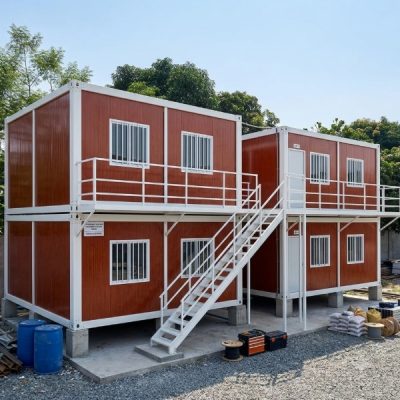
Yes. Flat Pack Container Houses feature heavy-duty steel corner posts and reinforced top/bottom structural frames that allow them to be safely stacked up to 3 stories high with external steel staircases and covered walkways.
How are water, electricity, and sewage handled in a remote camp?
Modular units arrive pre-wired with distribution breaker panels and pre-plumbed to external connection ports. On site, licensed contractors connect main power feeds (or generators) and link water lines and sewage outlets directly to central camp utilities or septic holding tanks.
What is the lifespan of a modular worker accommodation camp?
High-quality modular worker accommodation units manufactured with hot-dip galvanized steel framing and anti-corrosion powder coatings have an operational lifespan of 15 to 20+ years, enduring multiple assemble-and-relocate cycles.
How Can You Request Camp Layout Drawings and Quotations?
Whether you are building a 50-man construction camp, a 1,000-man mining accommodation complex, or a remote site office hub, our sales engineering team provides full CAD site layouts, material spec sheets, and landed freight estimates.