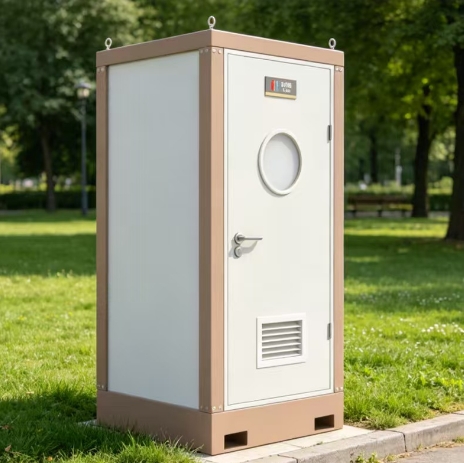
Key Takeaways
- Heavy-Duty Steel Construction: Built on a standardized, container-style galvanized steel chassis with insulated sandwich wall panels, engineered for long-term field durability and frequent site relocations.
- Configurable Modular Layouts: Easily customized to incorporate individual toilet cubicles, shower stalls, urinals, hand-washing stations, and separated gender compartments.
- Rapid On-Site Installation: Pre-wired and pre-plumbed in factory conditions to allow quick connection to local fresh water, drainage networks, or temporary storage tanks.
- Versatile Site Infrastructure: Provides essential health and sanitation facilities for construction sites, remote mining/energy camps, industrial expansion projects, and outdoor commercial events.
What Is a Portable Toilet Unit?
A Portable Toilet Unit is a modular, prefabricated sanitation building designed to deliver hygienic restroom and shower facilities where permanent plumbing infrastructure is unavailable or under construction.
Built using a heavy-duty steel frame and insulated composite wall panels, this container-style unit offers a far more durable, spacious, and weather-resistant alternative to lightweight plastic single-cabins. Portable toilet units are manufactured as self-contained or grid-connected modular systems that can be easily loaded, transported via flatbed truck, and repositioned across project sites.
The Portable Toilet Unit is a configurable modular solution rather than a fixed standard model. Floor plans, fixture counts (squatting or seated toilets), shower additions, water heating systems, and ventilation options are tailored to fit workforce headcount, site utility constraints, and regional sanitary regulations.
What Are the Technical Specifications of a Portable Toilet Unit?
The table below outlines standard structural metrics, engineering parameters, and material specifications for the Portable Toilet Unit platform:
| Specification Category | Details & Standard Engineering Parameters |
| Product Type | Portable Toilet Unit |
| Building Concept | Modular container-style sanitation building |
| Structural Frame | Cold-formed / hot-dip galvanized structural steel chassis & corner posts |
| Wall & Roof Envelope | Insulated sandwich panels (50 to 100mm EPS, Rockwool, or PU core) |
| Flooring System | Fiber cement / marine plywood subfloor topped with anti-slip PVC or aluminum checker plate |
| Sanitary Fixtures | Ceramic / stainless steel toilets (seated or squatting), ceramic basins, urinal troughs |
| Primary Applications | Construction job sites, worker housing camps, industrial plants, remote energy sites, outdoor events |
| Configuration Options | Single standalone cabin, multi-compartment unit, or linked multi-unit complex |
Why Choose a Portable Toilet Unit for Your Site?
1. Practical and Immediate Site Sanitation
Civil engineering projects, industrial developments, and remote work sites require functional, compliant sanitary facilities from day one. Modular portable toilet units allow site managers to rapidly establish clean, modern restrooms before permanent civil works commence.
2. Seamless Integration with Site Infrastructure
These units are engineered to work directly alongside prefabricated site offices, worker dormitories, dining halls, and site command posts. For large-scale mining or infrastructure camps, multiple sanitary modules can be linked into a master accommodation block.
3. Highly Adaptable Internal Layouts
Facility needs vary based on workforce size, shift patterns, and site demographics. Internal layouts can be configured with specific ratios of seated toilets, squatting pans, high-capacity urinal troughs, enclosed shower stalls, changing benches, and partition walls for male/female separation.
4. Rugged Construction for Multi-Project Reuse
Unlike light plastic port-a-potties that degrade quickly under harsh sun or wind, these steel-framed container units withstand tough industrial conditions. They are easy to wash down, simple to disinfect, and designed to survive repeated crane lifts and flatbed relocations over a 15+ year operational lifespan.
How Does a Portable Toilet Unit Compare to Alternative Solutions?
Evaluating building materials, spatial comfort, and durability helps procurement managers choose the right site sanitation method:
| Feature / Category | Modular Steel Portable Toilet Unit | Plastic Single Port-a-Potty | Site-Built Masonry Restroom |
| Structural Integrity | Galvanized steel frame & insulated panels | High-density polyethylene (HDPE) plastic | Reinforced concrete & brickwork |
| Thermal Insulation | High (50–100mm PU/Rockwool core) | Uninsulated (hot in summer, cold in winter) | High |
| Service Lifespan | 5+ years; multi-project reuse | 3 to 5 years under harsh site use | Permanent; non-relocatable |
| Deployment Speed | Immediate hookup upon site placement | Immediate drop-off | Months of on-site construction |
| Capacity & Space | Spacious multi-stall layouts + showers | Compact single-user capacity | Custom multi-user capacity |
What Applications Are Suitable for Portable Toilet Units?
Construction & Engineering Job Sites
- General building construction sites, commercial developments, and urban infill projects
- Roadworks, highway expansions, bridge construction, and rail infrastructure sites
Workforce Housing Camps & Industrial Complexes
- Modular worker dormitories, semi-permanent labor camps, and mining exploration camps
- Factory expansion projects, refinery turnarounds, and industrial maintenance hubs
Outdoor Commercial Events & Public Gathering Facilities
- Outdoor music festivals, agricultural fairs, sporting events, and public exhibitions
- Temporary transit hubs, disaster relief sites, and municipal emergency response centers
Remote Resource & Agricultural Projects
- Remote solar/wind farms, pipeline construction corridors, and logging camps
- Agricultural harvesting hubs and remote research outposts
How Does a Portable Toilet Unit Project Work?
Procuring and installing a modular Portable Toilet Unit involves four structured operational steps:
- Requirement Confirmation & Site Assessment:The buyer determines workforce headcount, gender ratios, required shower facilities, site power/water supply conditions, waste management plans (mains connection vs. septic tank), and destination climate factors.
- Layout & Technical Design:Compartment counts, door access points, plumbing routes, ventilation fan placements, water heater capacities, and anti-slip flooring materials are finalized in CAD engineering drawings.
- Factory Prefabrication & Assembly:The steel chassis is welded, galvanized, and fitted with insulated wall panels, electrical wiring, concealed PVC water distribution lines, floor drainage sumps, and sanitaryware under factory quality control.
- Delivery, Placement & Utility Connection:The finished unit is shipped via flatbed transport, positioned onto level concrete piers or a compacted gravel pad using a crane/forklift, and hooked up to local fresh water, drainage outlets, and electrical lines.
What Interior and Facility Options Are Available?
Sanitaryware & Fixture Options
- Toilets: Western-style ceramic/stainless steel seated toilets or heavy-duty ceramic/stainless squatting pans.
- Urinals: Wall-mounted individual ceramic urinals or stainless steel wall trough urinals with auto-flush systems.
- Wash Basins: Individual vanity basins, wall-hung ceramic sinks, or stainless steel multi-tap washing troughs with integrated mirrors.
- Shower Systems: Enclosed shower stalls with water-saving showerheads, mixer valves, and privacy curtains/doors.
Utility & Climate Systems
- Water Systems: Pre-fitted PEX/PVC hot and cold supply piping, pressure pumps, and electric storage water heaters .
- Drainage Systems: Centralized waste manifolds for direct connection to municipal sewer lines or external holding tanks.
- Ventilation & Climate: Heavy-duty ceiling/wall exhaust fans, louvered vent panels, and optional wall-mounted air conditioning units.
- Electrical System: Waterproof IP65-rated LED light fixtures, external power inlets, leakage protection switches, and automatic hand dryers.
What Factors Should Buyers Consider Before Purchasing?
- User Capacity & Shift Peak Loads: Calculate the required number of toilets, urinals, and showers based on peak workforce size per shift and regional occupational health standards.
- Site Water Supply & Waste Disposal Method: Confirm whether the installation site has direct access to municipal water mains and sewer connections, or if holding tanks and water delivery trucks are required.
- Climate Rating & Panel Insulation: Select appropriate sandwich panel cores (EPS, Rockwool, or PU) to prevent pipe freezing in winter or heat buildup in high-temperature climates.
- Site Transport & Crane Placement: Ensure delivery trucks and mobile cranes or forklifts can clear access roads, gates, and overhead powerlines leading to the foundation site.
- Local Municipal & Health Codes: Review local environmental and sanitation regulations governing wastewater treatment, handicap accessibility, and site welfare facilities.
What Are the Frequently Asked Questions (FAQ)?
What is a Portable Toilet Unit?
A Portable Toilet Unit is a pre-engineered modular building fitted with plumbing, electrical, and sanitary fixtures to provide temporary or semi-permanent restroom and shower facilities across industrial, commercial, and construction sites.
Where are modular portable toilet units commonly used?
They are used on construction job sites, worker accommodation camps, industrial factories, outdoor public events, disaster relief zones, and remote resource extraction sites.
Can a portable toilet unit include showers?
Yes. Floor plans can be customized to include any combination of toilet stalls, shower cubicles, changing areas, urinals, and hand-washing counters.
How does the plumbing system connect on site?
Units are pre-plumbed during factory assembly to a single external fresh water inlet and a central sewage discharge manifold. On site, trade crews simply connect these ports to municipal lines or external water/waste holding tanks.
Can multiple toilet units be connected together?
Yes. Multiple units can be placed side-by-side to create large, high-capacity sanitary blocks with separate entrances for male and female personnel.
How long does a steel-framed portable toilet unit last?
When properly maintained, the galvanized steel framework and insulated panel system offer a service lifespan of 15+ years, handling multiple site relocations without structural failure.
How Can You Request a Project Layout and Quotation?
Whether you need a single site restroom cabin, a multi-stall shower/toilet block for a worker camp, or flat-pack sanitation units for remote infrastructure contracts, our engineering team provides complete CAD layouts, fixture specifications, and landed freight quotes.